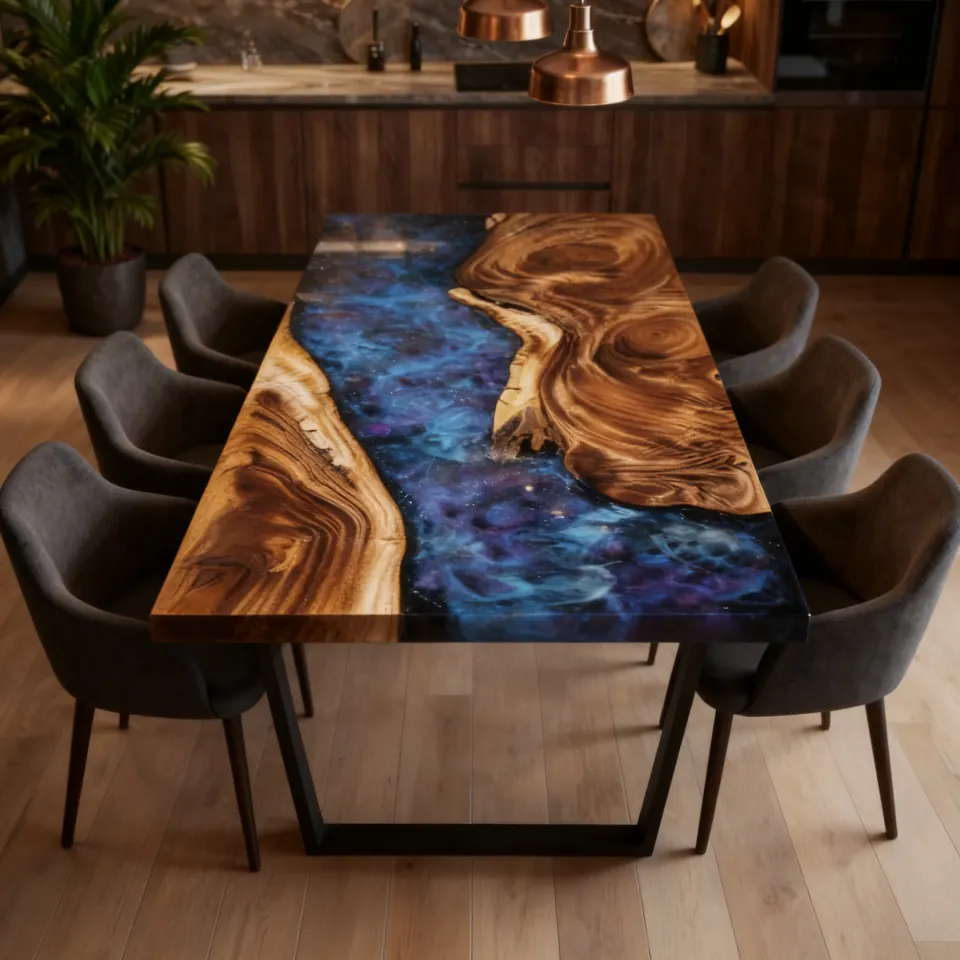
Guide · Dining · Organic Modern
7 Epoxy Dining Table Ideas for Organic Modern Rooms
Seven room-first ways to place a live-edge epoxy dining table inside a home that already has personality. Each idea includes the room shape it suits, the seat count it comfortably holds, and the walkway it leaves behind.
The best epoxy dining tables don’t sit in staged spaces. They sit in rooms with earth-toned walls, timber floors, tall windows, or a single matte pendant hanging low. This guide walks through seven such rooms and the resin table that belongs in each. Sizing and walkway notes follow.
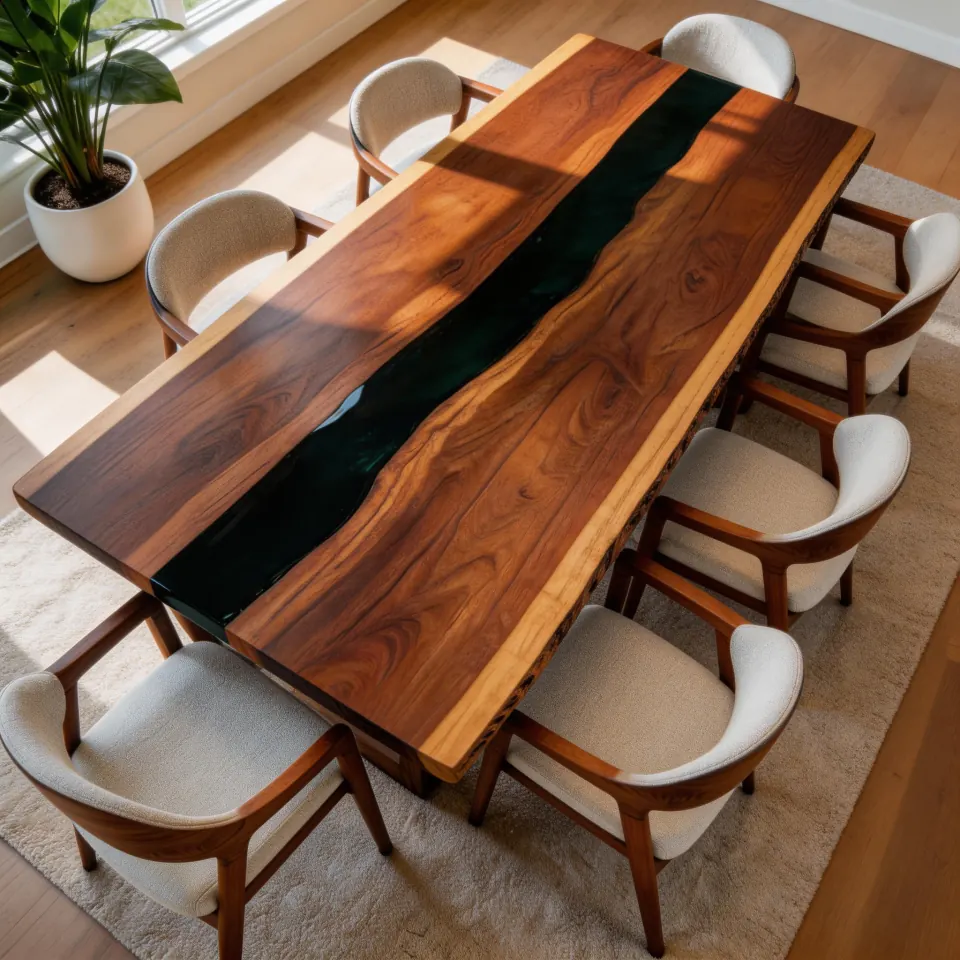
Idea 01 · Long walnut
A long walnut slab with a slim dark resin river
A wide walnut slab joined by a narrow, almost-black resin channel keeps the surface reading as wood first. Pair it with soft cream upholstered chairs so the table is the darkest line in the room, and let sunlight from a nearby window graze the grain.
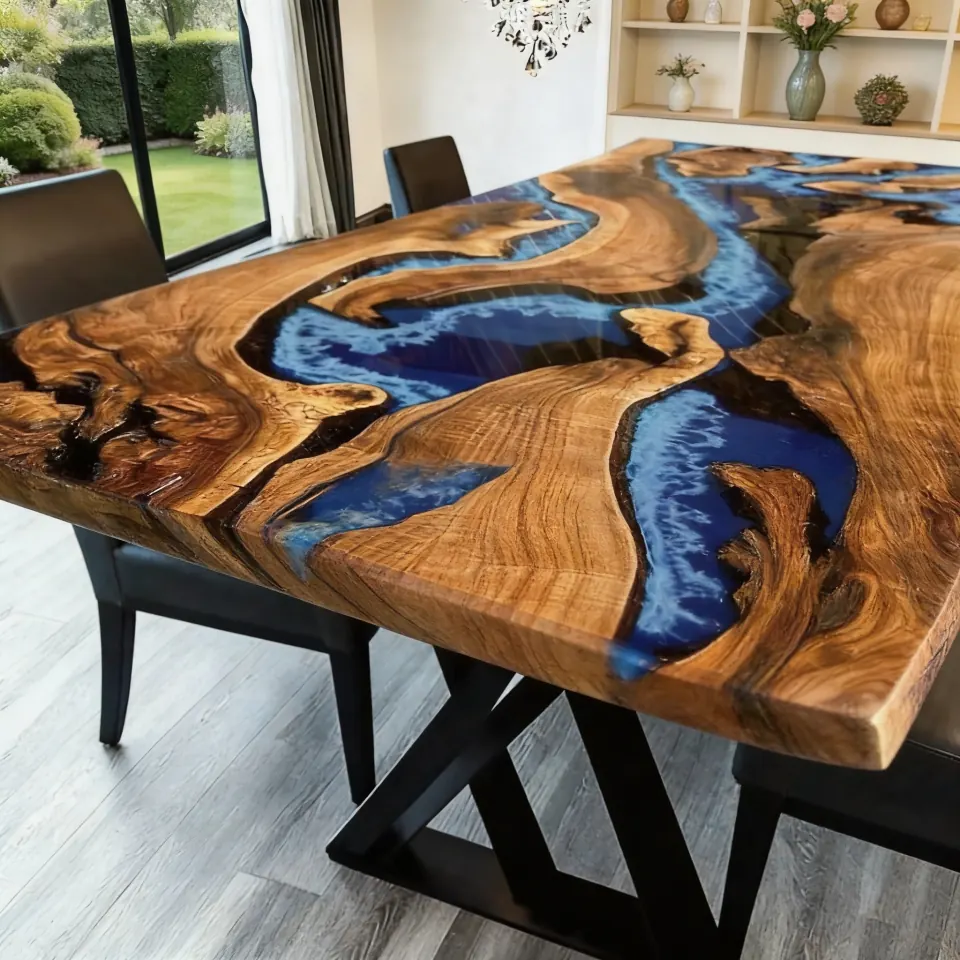
Idea 02 · Garden view
A translucent blue-resin river beside a garden window
Choose a translucent slate-blue resin river against a warm walnut slab when the dining room opens onto a garden. The resin picks up the outside light and reads almost like water — the room stays organic modern because the color story is limited to wood, garden, and resin.
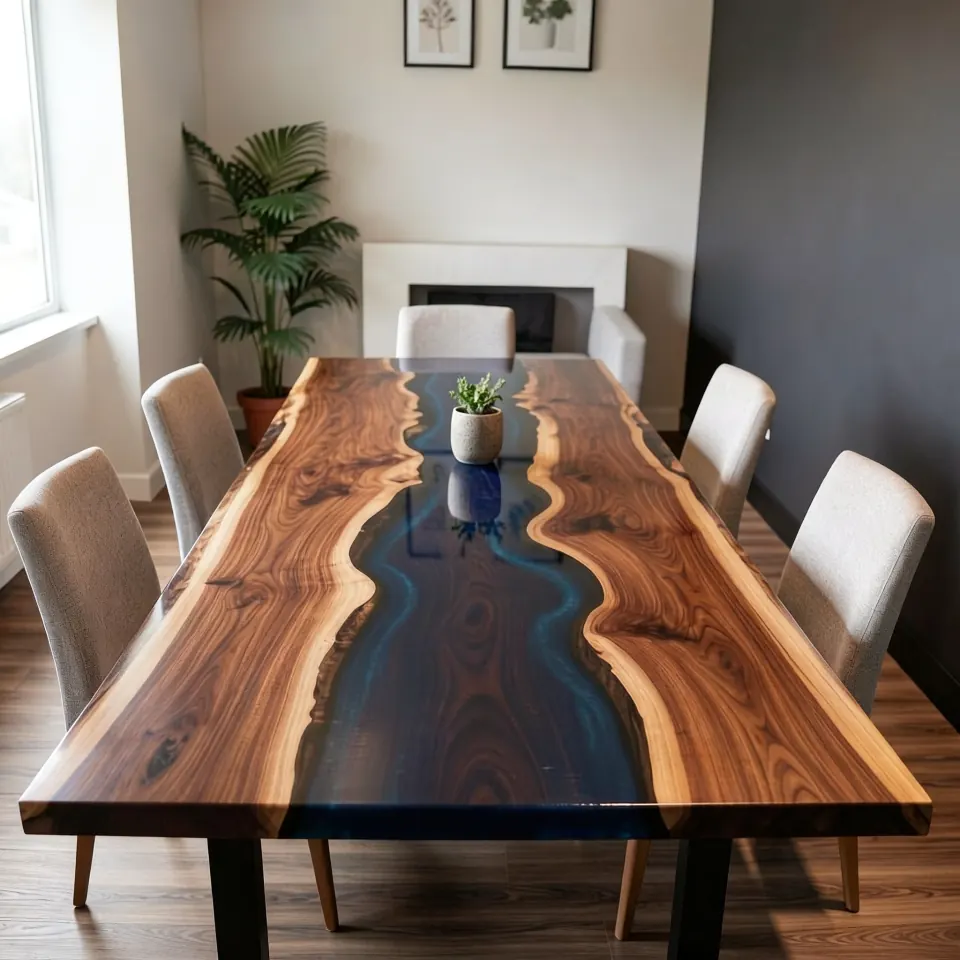
Idea 03 · Modern dining room
A long walnut and deep-blue resin table in a bright modern room
In a bright rectangular dining room with light walls, a long walnut slab and a deep translucent blue resin river gives the space one clear focal point without adding a second colour. Keep chairs soft-neutral so the resin band stays the only saturated element in the room.
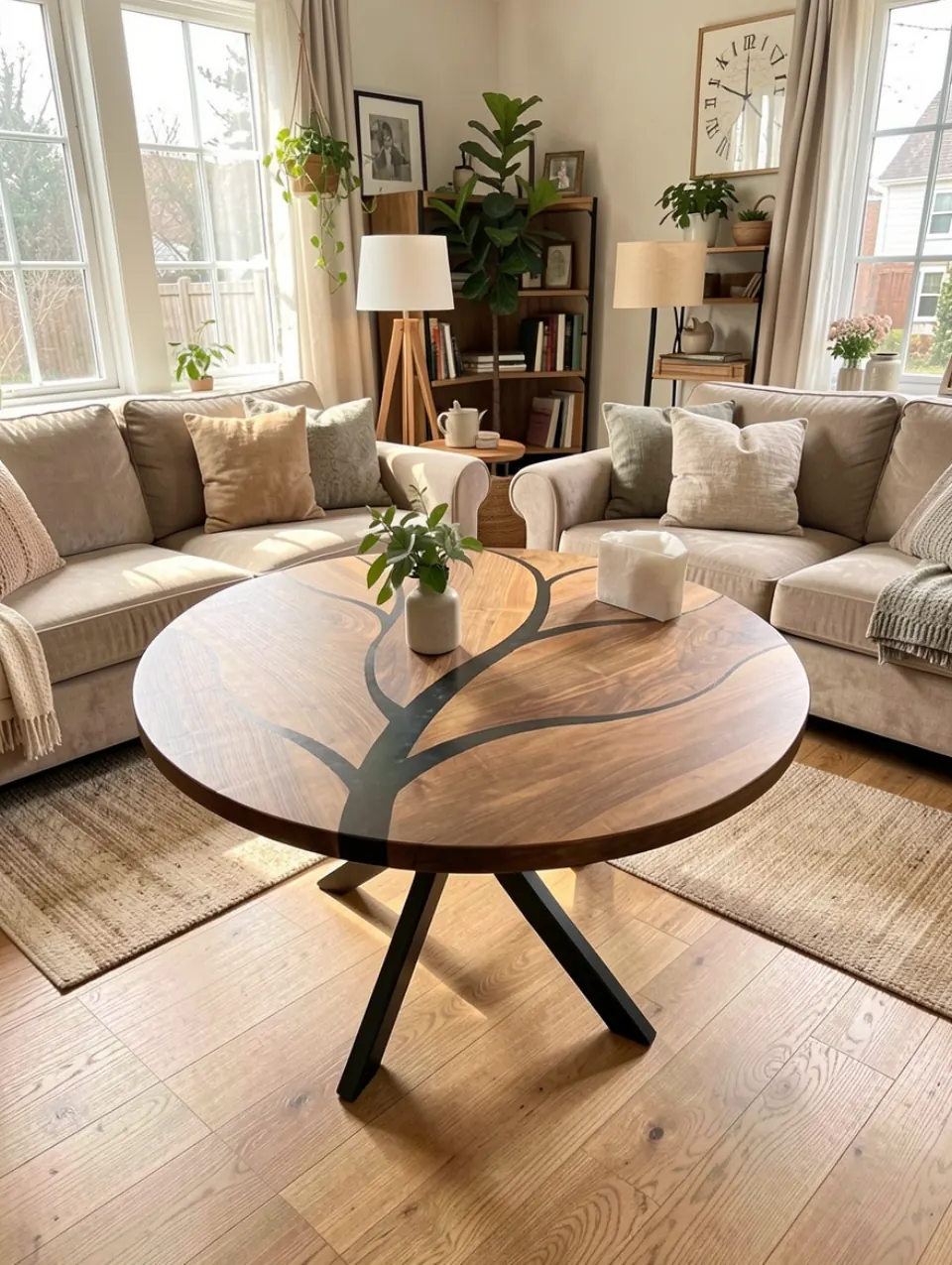
Idea 04 · Compact round
A compact round table with a slim tree-branch inlay
For a small alcove or a studio apartment, a round walnut table with a slim dark branch-shaped resin inlay resolves a tight room. A soft sofa backdrop and a warm rug underneath keep the surface reading as furniture, not decor.
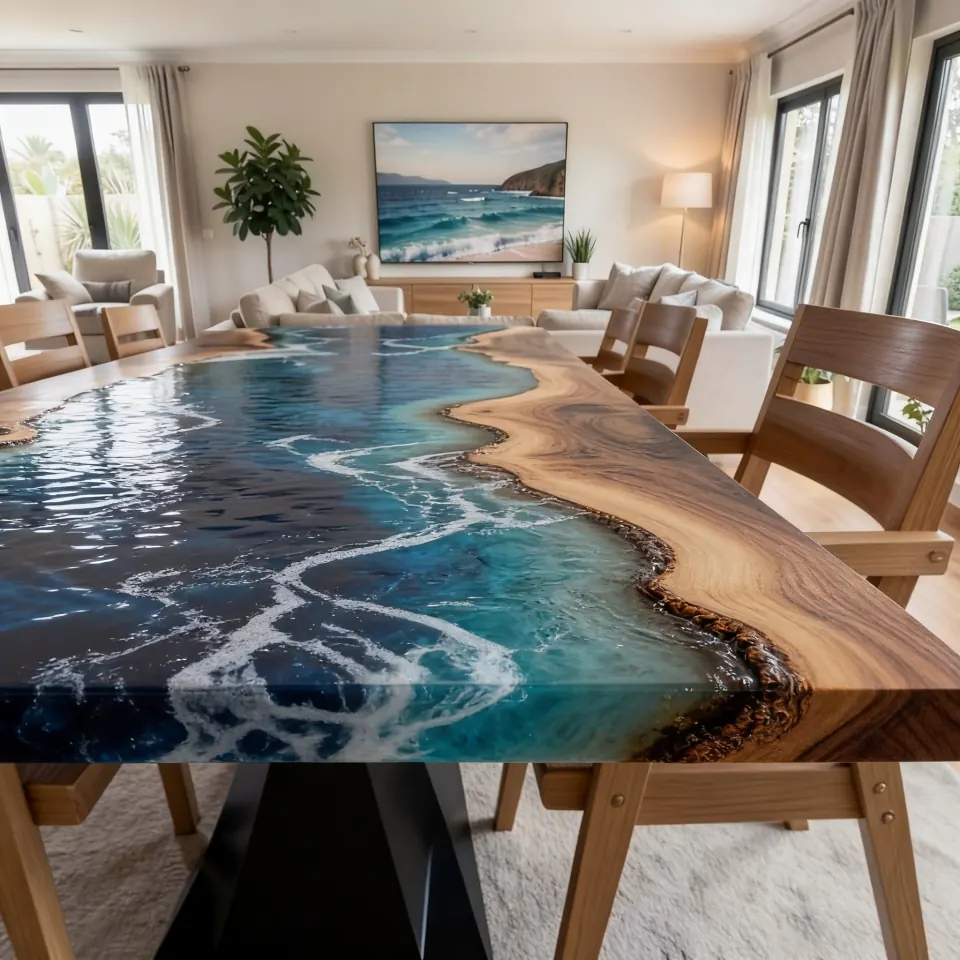
Idea 05 · Long gatherings
A wide wave-pattern resin table for open-plan gatherings
When the room hosts long meals, a wide slab with a full wave-pattern resin surface gives the table its own centrepiece. Anchor it with a matching seating rail on one side and keep the other side as a wide walkway — 100 cm minimum on the serving side.
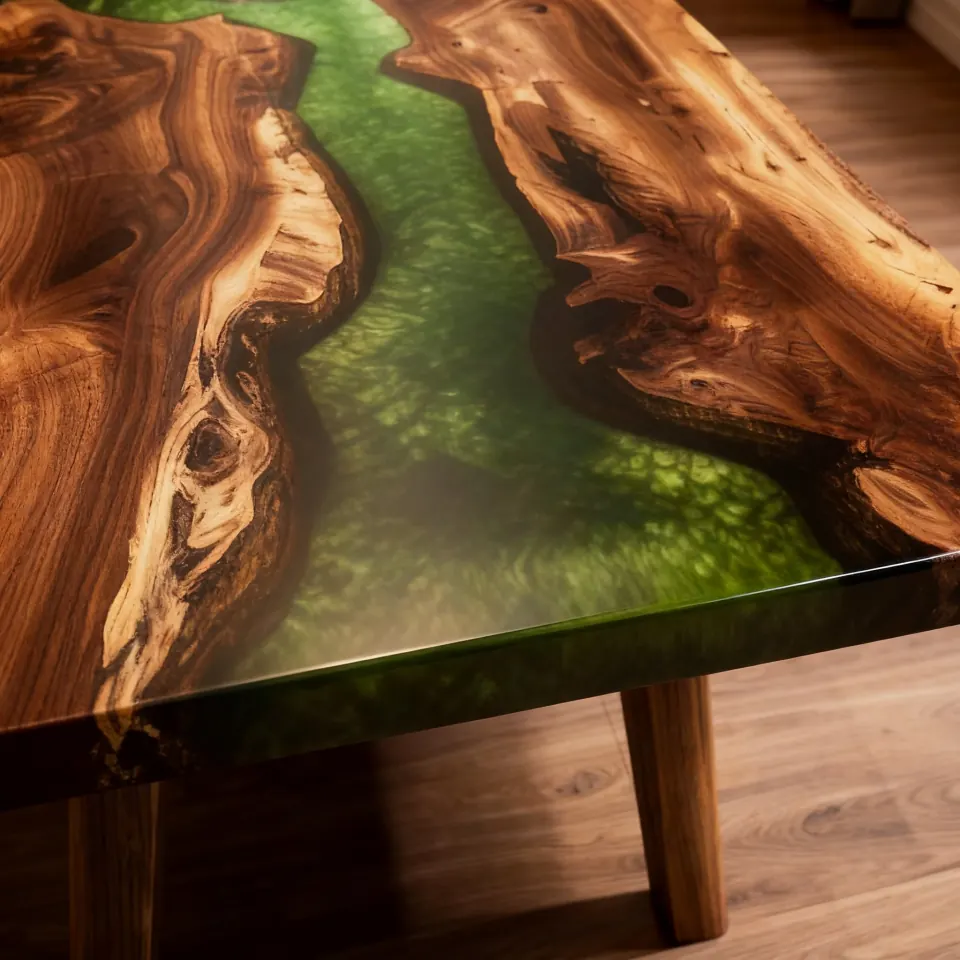
Idea 06 · Green resin
A walnut slab with a green resin river for green-toned rooms
Against sage or dark-green walls, a walnut slab with a translucent emerald resin river feels earth-toned but not heavy. Keep chairs light — bleached oak or off-white upholstery — so the room does not collapse into one saturated tone.
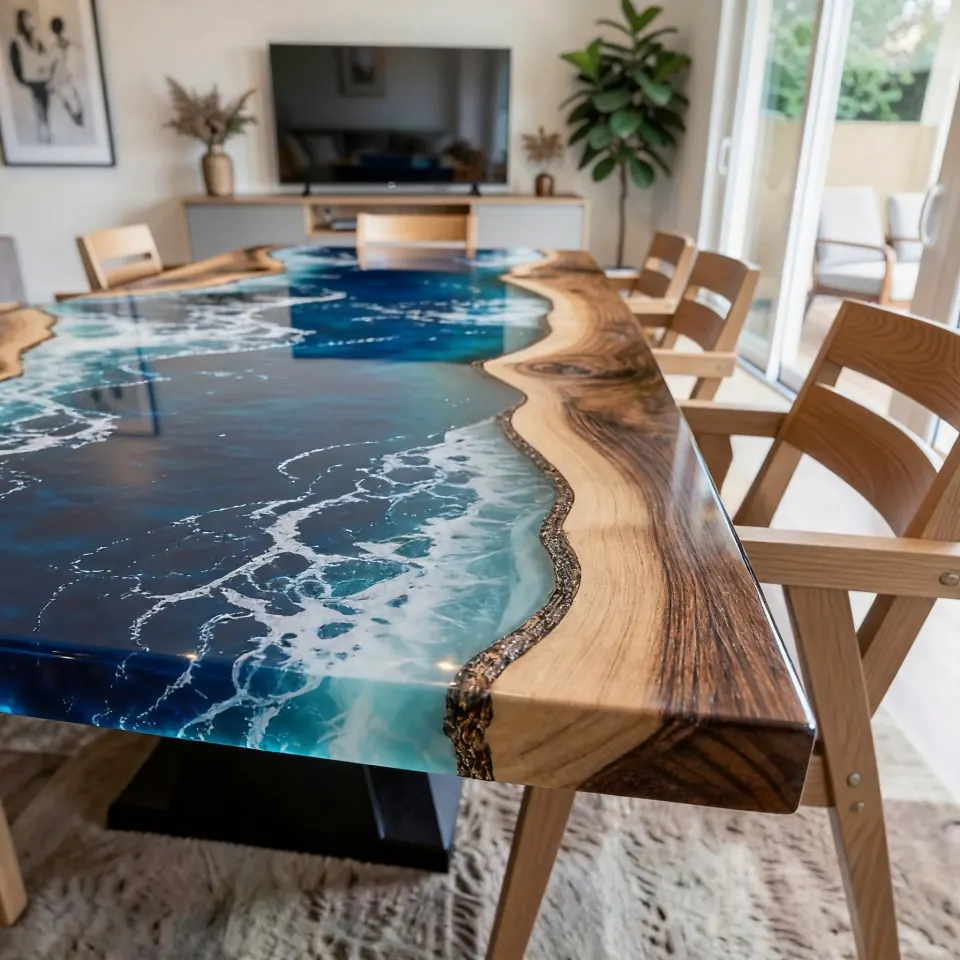
Idea 07 · Ocean surface
An ocean-wave resin surface for coastal-modern rooms
A live-edge walnut table with a fully poured, wave-textured resin surface reads almost like a still ocean under afternoon light. Use black trestle legs to give the top structure and stop it from disappearing into a bright, sun-lit floor.
Table size, seat count, and walkway
A resin table that looks calm in a photograph often feels tight in a real room because the walkway around it is wrong. Before committing to a length, sketch the walkway on the floor with painter’s tape. The room will tell you which of these sizes actually fits.
| Table size | Seats | Walkway |
|---|---|---|
| 110 cm round | 4 | 90 cm minimum on all sides |
| 160 × 90 cm | 4 – 6 | 90 cm on the entry side, 75 cm elsewhere |
| 200 × 100 cm | 6 | 90 – 100 cm on the entry side |
| 240 × 100 cm | 8 | 100 cm on at least one long side |
| 280 × 110 cm | 8 – 10 | 100 cm minimum; 120 cm ideal on the serving side |
Wood and resin direction
Choose the slab species first. Walnut is warm and high-contrast; oak is calmer; elm sits between the two. Match resin tone to the slab, not to the walls of the room — walls change more often than the table will.
Warm palettes
Walnut with translucent amber, deep smoke, or a very quiet slate blue. These pair well with terracotta walls, timber floors, and rattan seating.
Cool palettes
Bleached oak with clear resin, pale sea-glass, or a very light grey. These pair well with lime-washed walls, concrete floors, and off-white upholstered chairs.
Contrast palettes
Any slab with an opaque black or opaque bone resin. The resin reads as a band of color rather than a transparent layer — treat it like a stripe of paint across the table.
Buying notes
- Sketch the walkway on the floor with tape before you order.
- Sit in the chair you plan to use, at the table height you plan to buy. 74 – 76 cm feels standard; anything above 78 cm reads as bar-adjacent.
- Ask for a slab photograph, not just a render. Grain direction is not something a render can honestly show.
- Ask how the top edge is finished. A tight micro-bevel on a resin edge is more comfortable in daily use than a fully sharp square.
- If the room has strong sunlight, ask about UV stability. The right studio will already have a stock answer.
Short FAQ
What is the difference between an epoxy river table and a full-resin table?
A river table has one or two wood slabs joined by a resin channel. A full-resin table pours resin across the entire top with a smaller inlay of wood or stone. River tables read more as furniture; full-resin tops read more like a surface.
Which wood species holds up best with resin?
Walnut, oak, and elm are common because their grain reads clearly under a resin pour. Very oily species can complicate adhesion. If you have a species in mind, discuss it with the studio building your piece before committing to a resin tone.
Should the resin be clear or colored?
Start with the wood. A high-contrast walnut usually pairs well with translucent color. A calmer bleached oak often reads better with clear or lightly tinted resin so the grain stays legible.
How much clearance do I need around the table?
Aim for 90 cm on the side people walk past, and at least 75 cm on any side used only to seat guests. If a chair sits between the table and a wall, you need the full 90 cm.
Brand disclosure. Slab & Space is an editorial furniture guide by ThawHome. When a link on this page points to thawhome.com, that is the studio’s own site. Nothing on this page is a sponsored placement.